We learned to count everything–except what counts.
The Bus and the Body Count: A Cautionary Tale
In the early 2000s, there was no hotter ticket in evangelicalism than Mars Hill Church in Seattle. In fact, Christianity Today chronicled the saga of this church in their podcast, “The Rise and Fall of Mars Hill.”
Mars Hill was the epitome of the "We Build" model—aggressive, culturally relevant, and exploding with numerical growth. At its helm was Mark Driscoll, a leader with a preacher’s gift and a CEO’s ruthlessness. The metrics were staggering: 15,000 weekly attendees, a global podcast audience, and a brand that seemed invincible.
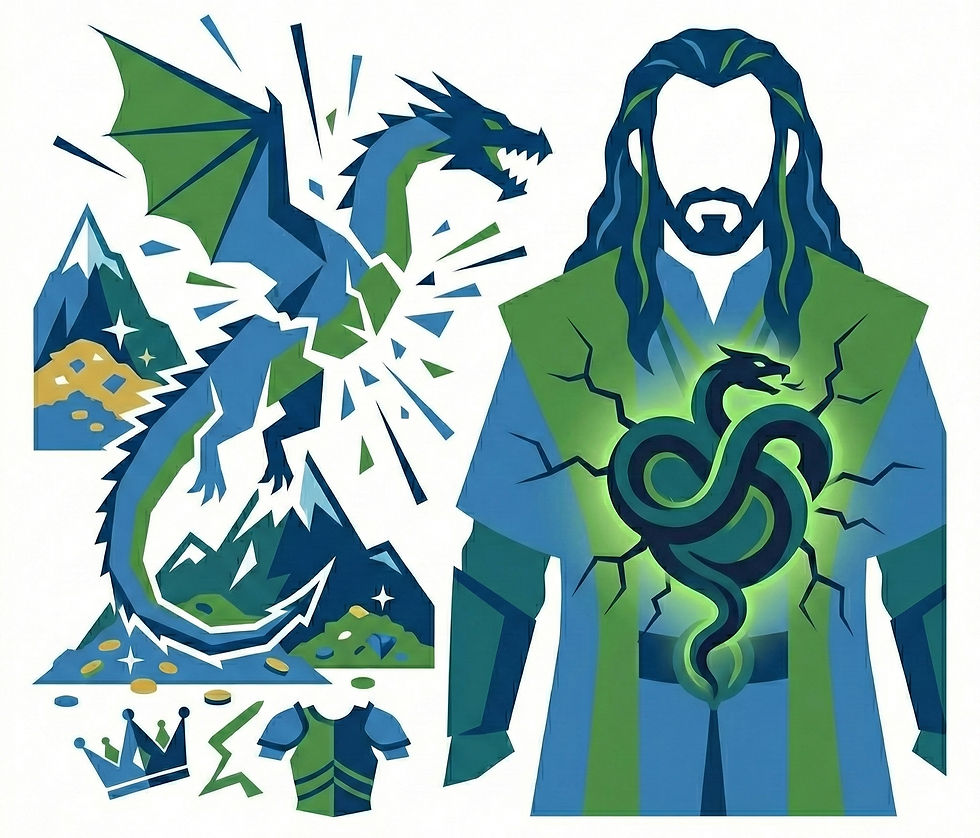
But beneath the hood of this high-performance vehicle, the engine was running on a toxic fuel mix of narcissism and utility. Driscoll famously described the church not as a body or a family, but as a bus. He told his leaders that the bus had a destination, and if anyone got in the way, the bus would run them over. "There is a pile of bodies behind the bus," he once said, "and by God’s grace, it’ll be a mountain by the time we’re done."1
He was building a movement. He was building a brand. He was building a legacy. But was he building the church?
In 2014, the wheels didn't just come off; the entire chassis disintegrated. The collapse of Mars Hill wasn't just a leadership failure; it was a structural inevitability. When the foundation is human personality ("Petros") rather than divine confession ("Petra"), the gates of hell don't even need to attack. They just have to wait for the mortar to crack. The church dissolved, the campuses fractured, and thousands of believers were left spiritually homeless, victims of a "We Build" project that mistook adrenaline for the Holy Spirit.
This story is not an anomaly. It is the logical conclusion of a theology that believes we are the ones doing the heavy lifting.
The Great Divergence: The Carpenter vs. The Contractor
In Matthew 16:18, Jesus makes a statement that serves as the exclusive franchise agreement for the Kingdom of God: "I will build my church."
Notice the pronoun. I. Not we. Not you. Not us.
Jesus is the Builder. He is the Architect. He is the Construction Supervisor.
Yet, walk into the average church growth conference or Christian leadership meeting this year, and you will hear a different gospel. You will hear the gospel of the Contractor. This is the subtle, pervasive belief that Jesus provided the raw materials—salvation, the Bible, the Holy Spirit—but He left the actual construction up to our ingenuity. We have become the General Contractors of the Kingdom, sub-contracting Jesus out for the "spiritual stuff" while we handle the marketing, the strategy, and the metrics.
You may protest. But think for a moment. Maybe read the previous paragraph again before you read the next provocative statement.
The difference between a church built by the Carpenter and a church built by Contractors is not just semantics; it is the difference between a sanctuary and a shopping mall.

With that said, I want you to understand what I am not saying. I am not saying that outward growth does not matter. It does. The early church counted how many were saved in their first service, about three thousand souls in the Book of Acts, chapter 2. There are multiple references to the number of people at different gatherings in the New Testament. Even in the Old Testament, there is a book by the name of Numbers! Numbers are important and so is outward growth.
If we deny that outward growth matters, we end up sanctifying mediocrity and baptizing apathy. Faithfulness and fruitfulness are not enemies.
We need to organize. We need to plan. I am not saying we don’t.
But here is the pivot: What you measure shapes what you value; what you value shapes what you become. If the most celebrated outcomes are the easiest to report, then leaders will naturally shape churches to favor these outcomes. Over time, a church can become an institution that excels at production while slowly starving formation. And the institution must be protected at all costs, even if it means sacrificing some of its members.

To demonstrate my point, I present to you a working contrast of the two models. However, remember these are “characterizations.” I am not making a statement that every church is this way, but in my experience, many churches in our Southern Baptist Convention have a tendency toward the “contractor” model, and could use some reflection and correction. These are broad descriptions and sweeping claims, but valid nonetheless.
Read the difference and weep.
The Contractor’s Model: "Success"
In the "We Build" paradigm, the church is an enterprise. Its goal is market share. Its method is anxiety-inducing pragmatism.
The Metric: The "Holy Trinity" of the Contractor is Bodies, Budgets, and Buildings. If these numbers are up, God is present. If they are down, we need a new strategy.
The Leader: The pastor functions as a CEO or a brand manager. Charisma is valued over character because charisma fills seats.
The People: They are "resources" to be deployed or "customers" to be retained.
The Carpenter’s Model: "Faithfulness"
In the "Jesus Builds" paradigm, the church is a body. Its goal is maturity. Its method is faithful obedience.
The Metric: The Fruit of the Spirit. Are people becoming more patient, kind, and self-controlled? These are "lead measures" that predict future health, unlike attendance, which is a "lag measure" of past performance.
The Leader: The pastor is a shepherd, smelling of sheep, often inefficient with their time because they are busy with the slow work of soul care.
The People: They are "living stones" (1 Peter 2:5) being fitted together by God, often through friction and conflict, into a holy temple.
When we try to do Jesus' job (building), we end up exhausted. When we neglect our job (abiding), we end up empty. As Dallas Willard famously quipped about the modern church's obsession with growth hacks, "We are not only saved by grace; we are paralyzed by it." We expect God to zap us with growth while we ignore the disciplines of the Master Builder. 2

The Difference at Ground Level
How does this theological shift play out in the real world? Glad you asked. I will tell you how. It changes the very atmosphere of the church. The result is not merely a different leadership style. It is often a different kind of church. One that Peter, Paul and Timothy would not recognize.
This shift alters the Transcendentals—those timeless properties of Truth, Goodness, and Beauty that reflect God’s nature which I introduced in the previous blog. There I applied them to the general culture, here I apply them to the church we build - The Contractor’s Church and the church Christ builds - The Carpenter’s Church.
Truth: From Revelation to Relevance
In the Contractor’s Church: Truth is often curated for Relevance. The Contractor asks, "Will this sermon series preach? Will it offend the target demographic?" Truth becomes a product feature, optimized for user experience. We see this in the rise of "hologram preaching" and content that mimics the pacing of TikTok—fast, episodic, and designed to hold attention rather than transform the heart.3 The goal is to lower the barrier to entry so low that we forget we are entering a holy space.

In the Carpenter’s Church: Truth is valued as Revelation. It is the "North Star" that guides us, regardless of the cultural weather. The Carpenter’s church isn't afraid to be "weird" or "untimely." As the famous dictum goes, a church that marries the spirit of the age will find itself a widow in the next. The "Jesus Builds" model trusts that the naked Word of God has the power to build "Men with Chests"—people of conviction who don't need a smoke machine to feel the Spirit.4 (For many churches with online services, I appreciate that a smoke machine adds depth and richness to the video presentation. I am just making a point that I hope you will appreciate none the less.)
Goodness: From Virtue to Utility
In the Contractor’s Church: Goodness is redefined as Utility. A person is "good" if they volunteer, tithe, and don't cause trouble. A leader is "good" if they produce results, even if they leave a trail of emotional debris behind them (the "bus" analogy again). This leads to "Vampire Christianity"—a term Dallas Willard used to describe people who want just enough of Jesus' blood to save them from hell, but none of His life to change how they treat their neighbor.5 It produces a culture of functional deism where we claim to trust God but operate entirely on human horsepower.
In the Carpenter’s Church: Goodness is understood as Virtue. It is the slow, often invisible formation of Christian character. Success is defined not by how many people attend, but by who those people are becoming. Are the husbands loving their wives? Are the business owners treating their employees with dignity? Are the singles living with purity and purpose? Have they really become salt and light? The Carpenter is building saints, not just consumers. He is interested in the "interior castle" of the soul, not just the curb appeal of the Sunday service.

Beauty: From Glitz to Glory
In the Contractor’s Church: Beauty is flattened into Glitz. The architecture mimics the shopping mall or the convention center—neutral, safe, and indistinguishable from the secular world.6 The "Green Room" culture separates the "talent" from the "audience," turning worship into a spectator sport where we watch professionals perform intimacy with God.7 It is the aesthetic of the "cool," which is always fleeting.
In the Carpenter’s Church: Beauty is valued as Glory. Roger Scruton, the philosopher of aesthetics, argued that true beauty is a "call to the divine"—it arrests us and forces us to look up.8 A church built by Jesus values the beauty of holiness. It might meet in a living room or a cathedral, but the aesthetic is one of reverence. It resists the "desecration" of modern utility. It refuses to turn the bride of Christ into a brand. As Scruton noted, "Beauty is vanishing from our world because we live as though it does not matter." 9 The Carpenter’s church restores beauty by being a place where the broken are made beautiful, not just where the beautiful are celebrated.
What We Lose When We Build
The divergence between these two models hits the ledger and the calendar.
The Cost of Labor: In the "We Build" model, burnout is the standard operating procedure. Pastors are quitting in record numbers because the burden of being the "Chief Energy Officer" is crushing.10 You cannot sustain a supernatural movement with natural energy. When we try to manufacture the wind of the Spirit with industrial fans, we just blow everyone away.
In the "Jesus Builds" model, the yoke is easy and the burden is light (Matthew 11:30). This does not mean there is no work; it means the work is fueled by grace, not grind. It is the difference between a rowboat (human effort) and a sailboat (harnessing the wind).
The Cost of Finance: The Contractor’s budget is heavy on "Presentation"—lights, stage, marketing, and the "Sunday Experience." The Carpenter’s budget is heavy on "People"—benevolence, mission, and discipleship. We see this in the shift of churches like The Village Church, which voluntarily slashed its budget by millions to move from a centralized "empire" model to a decentralized "multiplying" model.11 Redeemer Church, founded by Tim Keller made a similar move beginning in 2016 and completed that in 2022.12 They realized that reproduction (biological life) is cheaper and healthier than replication (franchise expansion).
The Cost of Fellowship: The "We Build" model offers "connections"—loose, low-commitment social networks. The "Jesus Builds" model offers "communion"—deep, covenantal relationships that can withstand offense. It is the difference between a "content-based" gathering and a "table-based" community. The emerging "Dinner Church" movement is a prime example of this return to the table, where the cost of entry is vulnerability, not just a ticket.13
Are You Building a Tower or a Temple?
This isn't just a critique of megachurch pastors. It is a mirror for every individual Christian. We all have an "Inner Contractor" that wants to build a life that looks impressive to the neighbors.

We measure our spiritual lives by lag metrics: How many chapters did I read? How much did I give? How many services did I attend? Jesus measures our spiritual lives by lead metrics: Am I growing in love? Is my anxiety decreasing as my trust increases? Am I becoming the kind of person who naturally does what Jesus would do if He were me?14
The Virtue of Temperance: To move from Contractor to Carpenter, we need the virtue of temperance—the ability to say "no" to growth that compromises our soul. We need to ruthlessly eliminate hurry, as Willard advised, “Hurry is the great enemy of the spiritual life.”15 We need to stop trying to be "original" and start being "faithful." As C.S. Lewis wrote, "No man who values originality will ever be original. But try to tell the truth as you see it... and what men call originality will come unsought."16
Resigning as General Manager of the Universe
The promise of Matthew 16:18 is offensive to our pride but a balm to our anxiety. "I will build my church."
The gates of hell—death, despair, and decay of culture—will not prevail against the church Jesus builds. But they will prevail against the church we build. To coin a phrase–They eat our marketing plans for breakfast. They are not scared of our fog machines. (Here I go again with the fog machines!) They are not threatened by our vision statements. They do not fear our spreadsheets.
But they tremble before a group of people who have resigned from the job of building the church and have taken up the job of being the church.
This year, 2026, let’s hand the hard hat back to the Carpenter. Let’s stop trying to build a tower to heaven to make a name for ourselves (Genesis 11) and start building a table on earth to welcome the stranger. Let’s stop measuring the height of our steeple and start measuring the depth of our roots.
Jesus is a better Builder than we are. And His warranty lasts forever.
End Notes
2Willard, Dallas. The Great Omission. HarperOne. 2006. p.166.
4Lewis, C. S. The Abolition of Man or Reflections on Education with Special Reference to the Teaching of English in the Upper Forms of Schools. HarperOne, 2001, Ch. 1.
5https://dwillard.org/resources/articles/why-bother-with-discipleship. This is also found in Willard’s book, The Great Omission. HarperOne. 2006. P.14.
14Willard, Dallas. The Divine Conspiracy: Rediscovering Our Hidden Life in God. Harper, 1988. p. 283.
15Comer, John Mark. The Ruthless Elimination of Hurry. Waterbrook, 2019. p. 19.
16Lewis, C. S. The Weight of Glory: And Other Addresses. HarperOne, 2001. p. 175.